Foster a child! @Innovat-ED

In this blog, I will talk about the design thinking case competition called Innovat-ED.  The students from one of the education courses named ‘Design Thinking Incubator -From Problem into Prototype-’ were leading a team of students, who are from French course and another education course, which is our course.  We had one day of brainstorming and idea creating session, and we had the actual day for the Innovat-ED.  On the preparation day, we went through a brain storming session and did several activities to divergent our thinking and then, several activities to convergent our thinking.  Then we thought of a prototype that we were making, and thought of how to make the participants involved. 
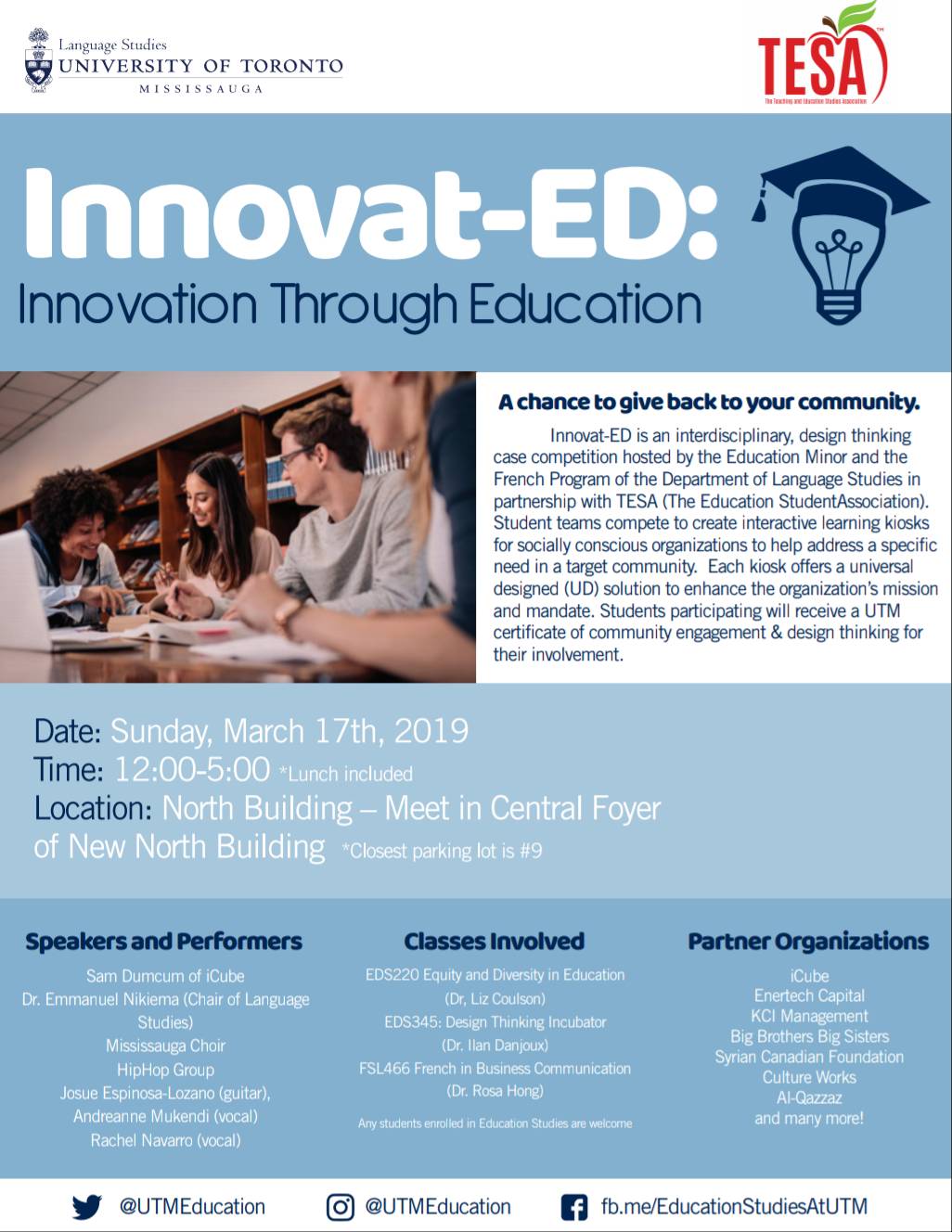
On the actual date of Innovat-ED, before we actually start to make our prototype, several different guests were going up to the front and sharing stories or playing musical instruments or singing.  All the stories the guests were sharing were great, and all the songs made me a little emotional, but one of their stories had a great impact on me.  A lady who owns an apparel brand was sharing that with each sale, they are sending ten meals to the people who doesn’t have enough food to eat.  She said that since young, she had a passion about nutrition, and now she is actually working and serving them.  It was amazing to hear that if we continue to have passion and move on, we can connect things even which looks a lot different for our passion.  She was talking about following our passion, and she mentioned us to follow your desire and do the thing which burns our heart.  I feel so sad about the very high suicide rate in Japanese schools, and I regained the passion towards it, through her speech.

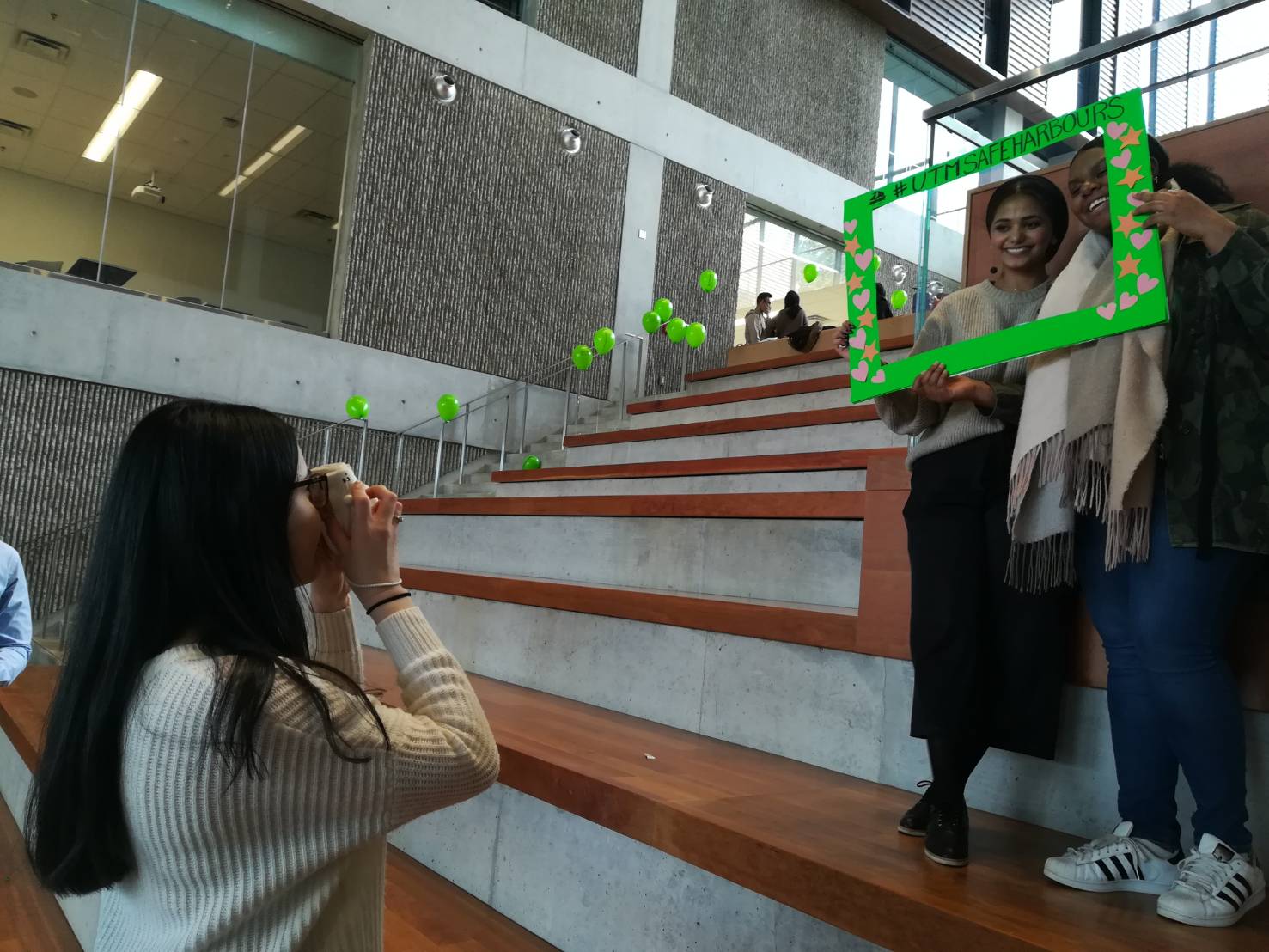
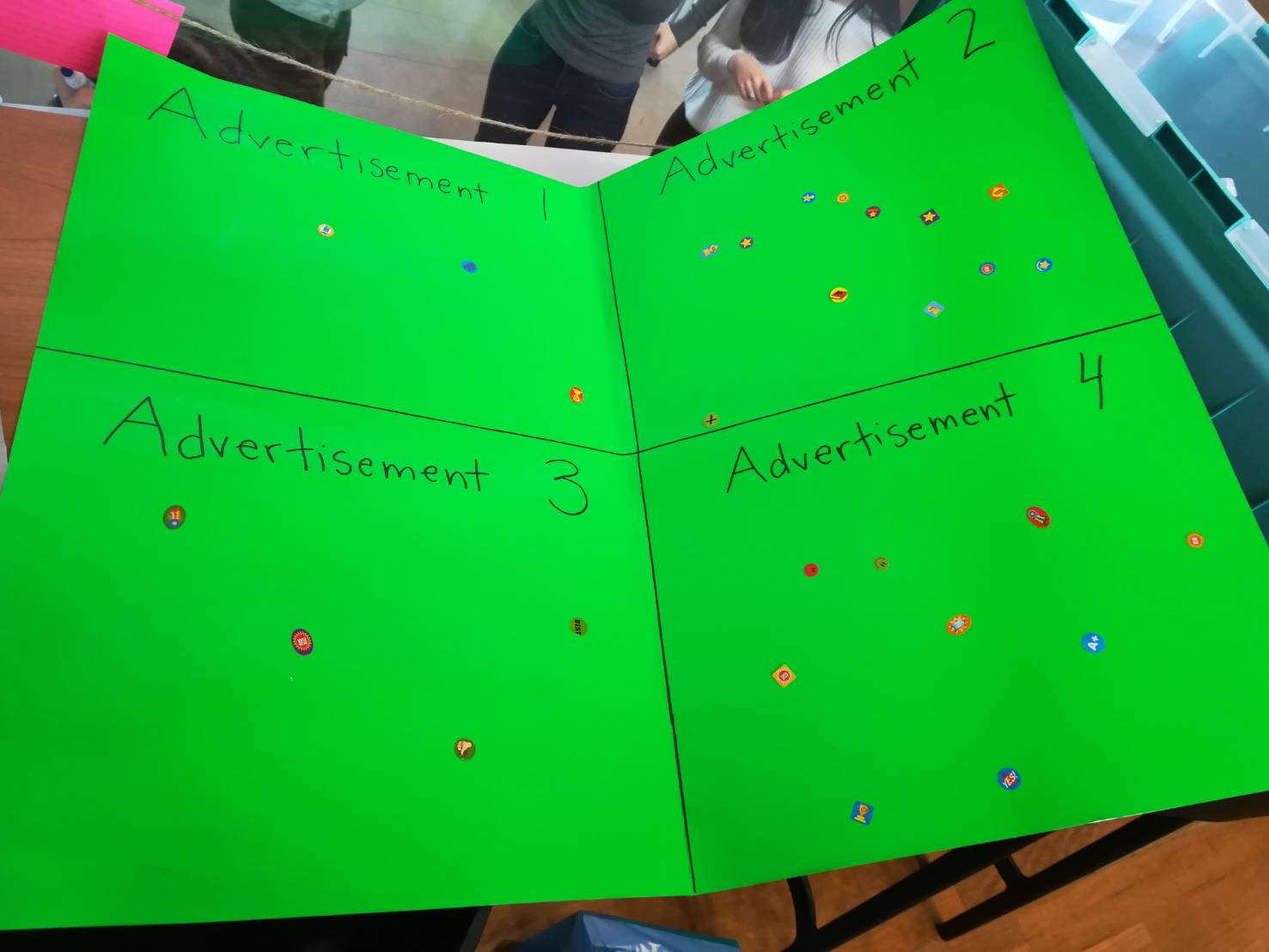
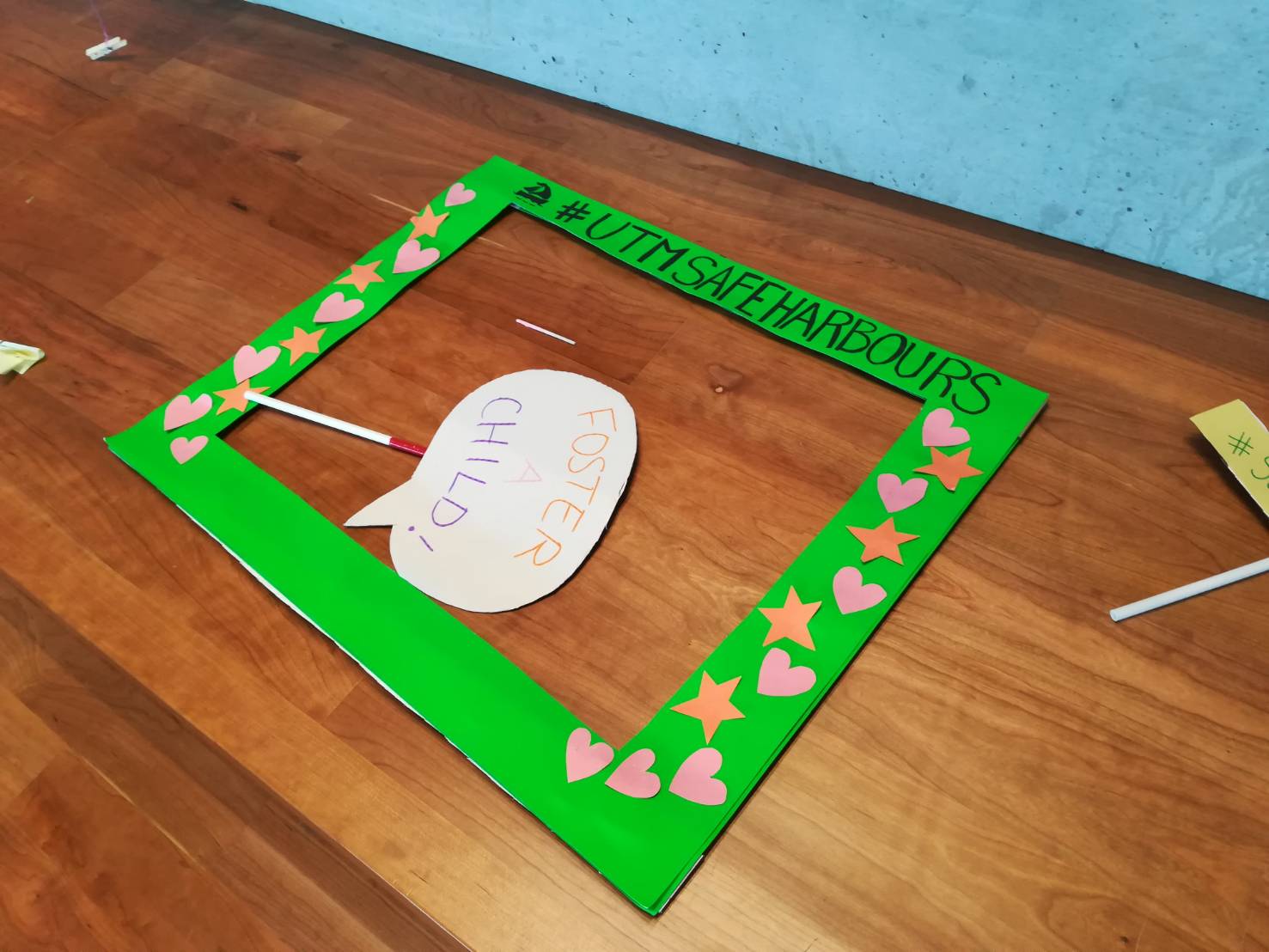
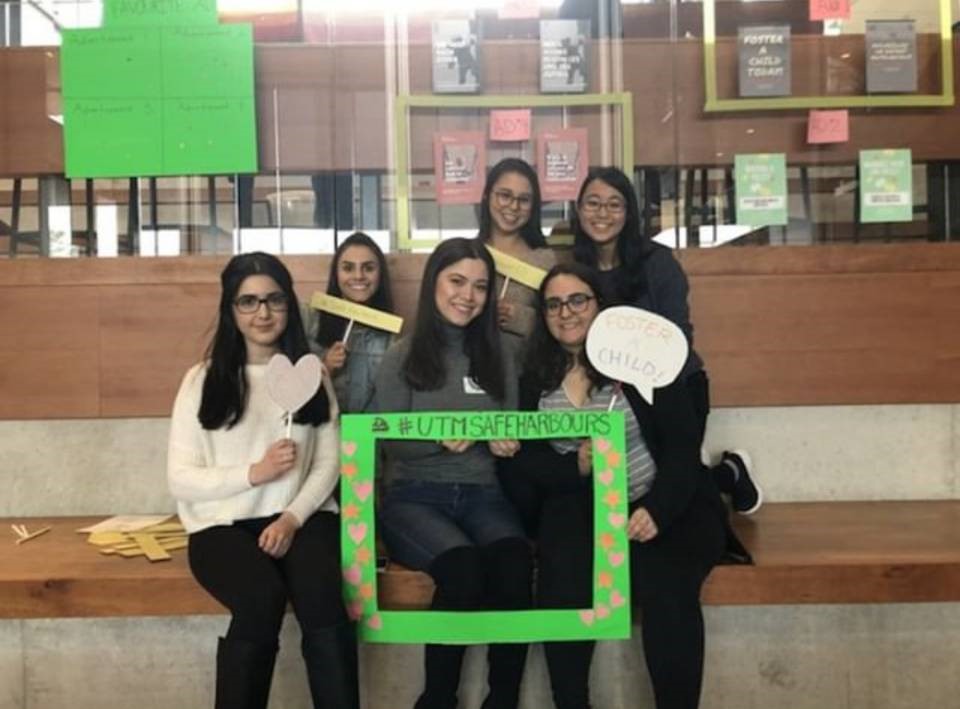
The organization we were targeting is Safe Harbours, and we wanted to solve a problem of the big lack of foster parents.  In order to solve this problem, we thought that advertising about foster care or educating them is the best way.  Therefore, we thought of doing a dot voting for different types of advertisements, and figure out what type best attracts people’s attention and speaks to them.  We also wanted to give out something to remind the people after they go back, so we decided to create a card about foster care, and attach a candy on it and hand it out to the people who comes to our booth.  We also wanted something memorable, and we decided to have a photo booth, and take a picture of them with the photo frame which has the organization’s name on it.  Then we figured out that one of us had a polaroid camera, so we decided to make it a free polaroid photo booth. 
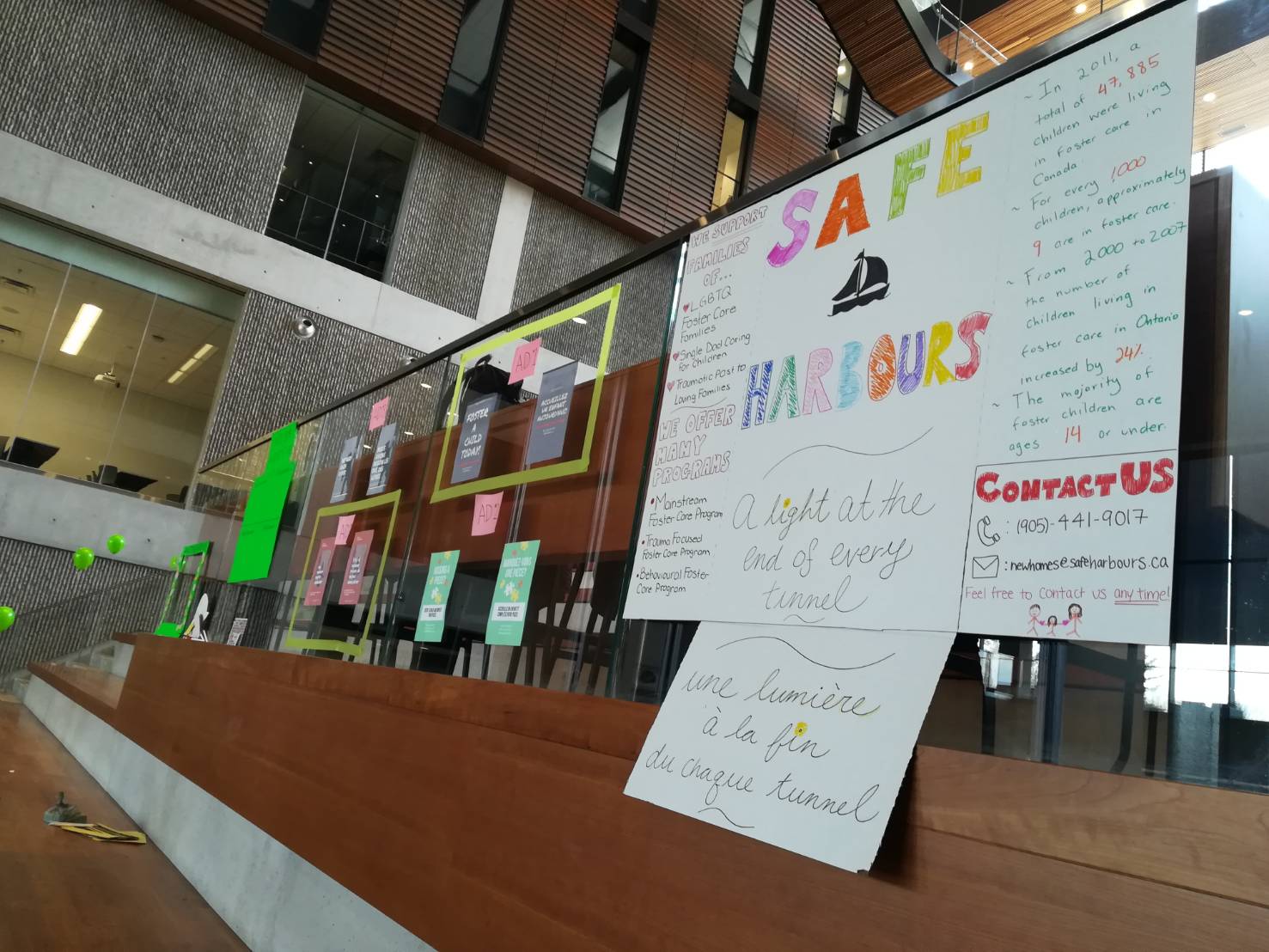
The thing that worked well was the polaroid photo booth, where most of the people decided to say yes to our offer and took a photo.  However, the card was a bit hard, because the table we placed the cards were on the opposite side from the wall that the poster and everything was placed, so some of them went out without getting a card.  In addition, we were a bit far away from the place where everyone had their booth, so we felt that people were disincentivized because of that.  Also, a lot of people were coming in from the wrong side.  We needed them to look at the information board about Safe Harbours, looks at the posters and do the voting, take a polaroid photo, and then grab a card.  But a lot of people were coming in from the wrong side, so we needed to ask them to get to the other end and start from there.  I think this was because our arrows which were showing the route was only on the floor, and on the side where we wanted them to come in, so people who were approaching us from the other side or from the upper level would not recognize that the arrow was even there.  We should have made our booth more visually attractive, and easier to understand the route. 
On top of those visual and practical improvement, we need to make more fundamental improvement about the basic information we provide.  One of the professors mentioned that for him who doesn’t have any knowledge about foster care, he didn’t understand how the foster care system works, and what kind of impact will it have towards his own kids.  We needed to think of a way to inform and educate about the actual process and the outcome, and how crucial the lack of foster parents is.  Then, we could have maximized the benefit of the things that we provided.  We needed to inform them first, ad then make something to remind them about that.  One thing that I was sad of is that I hadn’t had enough time to look around all the booths.  Hopefully next year, we can have more time to look at each other’s booth.  But overall it was so much fun!  Big thanks to my great team!
Language Conversation Circles!!

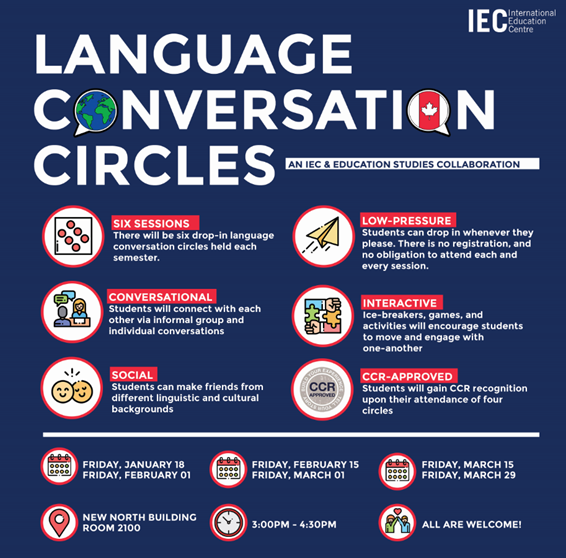
In this blog, I want to talk about my field placement.  I went to help out LCC, which stands for Language Conversation Circles.  At first, I had an image like a language exchange towards it, because I saw this line at the top of the page of LCC.

Are you interested in meeting new people and in learning new languages? If so, the IEC’s Language Conversation Circles (LCC) are for you!
(International Education Centre)

I thought that I am going to teach Japanese to the participants, but it was totally different.  Below that line, there was a line like this, and this describes better what LCC actually looks like.

These peer-led circles will give you the opportunity to learn with and amongst people from around the world while practicing your language skills in a fun, relaxed and creative environment. (International Education Centre)

LCC is IEC student staff organized program which collaborates with the EDS or TESA. (IEC: International Education Centre, which provides a range of programs and services to support and enhance the experience of international students.)
(EDS: Education Studies)
(TESA: Teaching and Education Studies Association, which is an organization for and of students in education studies field.)

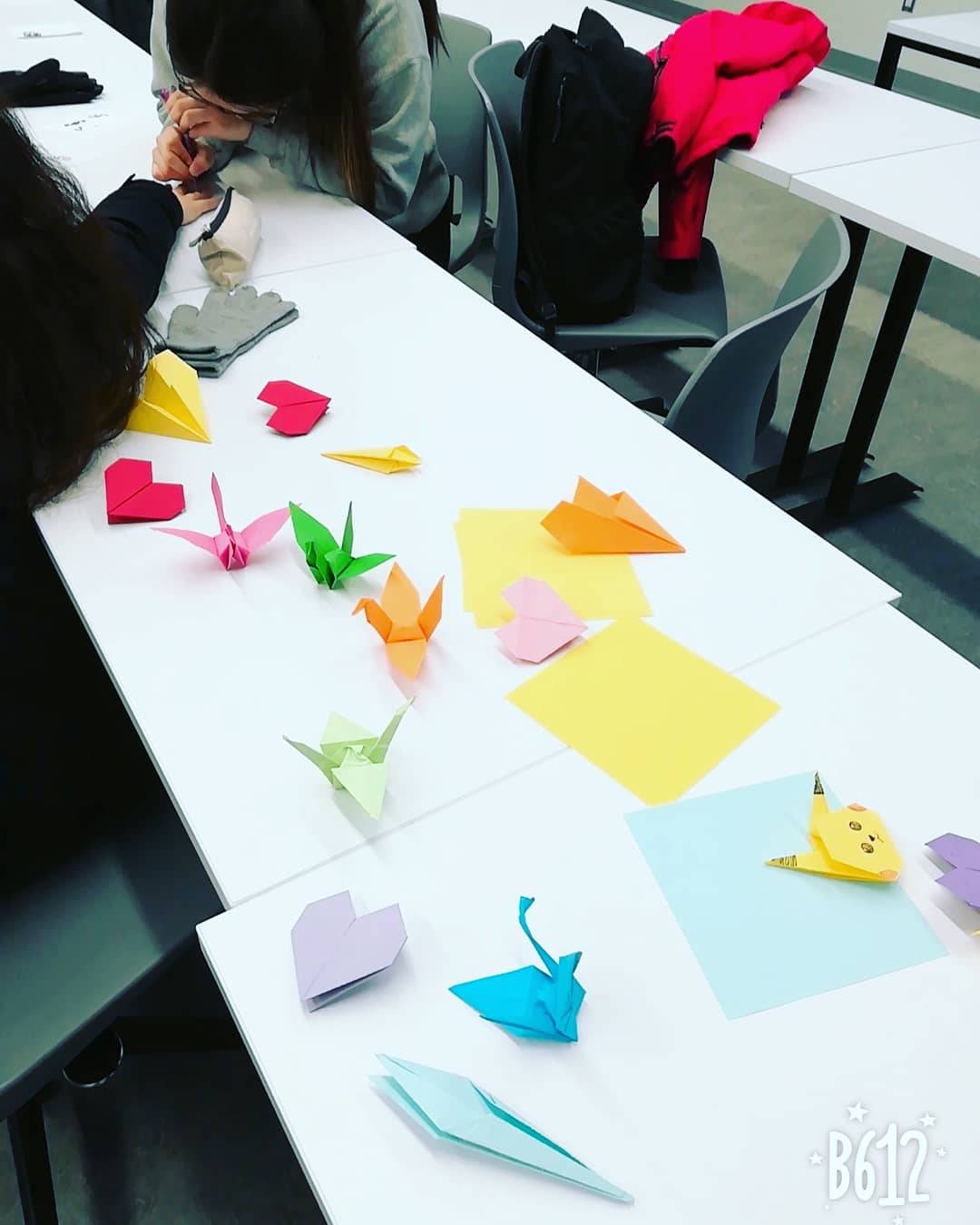
The IEC provides a chance for EDS students to harness their teaching and leading skills in the LCC sessions. The main goal of the circles is to provide an opportunity to learn about language and cultural aspects from others in a safe and meaningful matter.  LCC is a place where you have fun and learn about different cultures all around the world.  One session will be consisted with an ice breaker, discussion, two or three activities, and a reflection.  Each session has a theme, and all the activities are related to that.  For example, we had a session about video game, so we did an ice breaker, 4 corner discussion, Kahoot about various video games from all around the world, and then played a video game that we can all play together with our smart phones.  In another session about handcrafts in different cultures, we had an icebreaker and a discussion, and after that, we had three different booths to actually experience different handcrafts from all over the world.  One was Origami from Japan, Hana from India, bead art from Africa.  As you may see from this example, we will learn about other culture from all over the world, and have a discussion about the topic with a lot of people who are from different parts of the world, and who has different ideas.  I think this opportunity is precious, because we do have some opportunity of sharing different cultures and ideas, but we have a limited time or we need to relate back to the topic of the class.  Therefore, purely talking and sharing about our own culture in a safe and open environment is a chance we don’t often have.

I was able to help out as one of the facilitators, and I learned a lot through it.  I learned a lot of practical techniques to get people to be involved, and the points we need to be careful as teachers about how students react to certain things.  The various ideas and tools that everyone was using was totally new to me, such as Kahoot! Game, online design tool called Canva, Jackbox game, four squares discussion, and many more.  I experience how useful they are, and I really want to use them in my class in the future so that the students will be more engaged.  The other thing I learned that I need to be aware is the atmosphere of the class during the discussion.  Even here in Canada, the students were hesitating to answer when we were sitting in a row and it was quiet, so I think the shy Japanese students will be even more quiet.  When we were in circle or when we were doing four squares, the students were more opened, or when the atmosphere was franker and everyone was speaking, the students who were quiet was also talking.  I also learned that the teachers needs to be positive and have fun first in order to make students positive and have fun in class. 

The thing I am still wondering is how to actually integrate this into a Japanese classroom.  Compared to Canada, Japan is a less diverse country, and we don’t have a lot of mix in terms of race, ethnicity, religion, and culture.  There are some students who is different from the majority, but if we’re to do some activity focusing on the difference, we need to be very careful.  The Japanese culture itself really prioritize harmony, to be the same as everyone and not be the one outstanding one.  It is a really sensitive problem, which can even lead to bullying, so as a teacher, I need to be very careful not to create division. 

(Citation)
University of Toronto Mississauga> International Education Centre> On Campus Opportunities> Language Conversation Circles
Language Conversation Circles. Retrieved from
https://www.utm.utoronto.ca/international/https%3A/utm.utoronto.ca/international/campus-opportunities/language-conversation-circles.

Is summer break necessary?

So then, we come up to this question why we have this system of summer break even though we know that it has a bad effect on the children.  This system is sometimes said to have started in the 19th century so the children would have time to help out on the farm, but I think this may not be the case.  That is because the busy season for farmers is spring and summer when you sow and reap.  I looked up on several articles and figured out that the purpose of the summer break is to get rid of the heat of summer and also take a rest. 

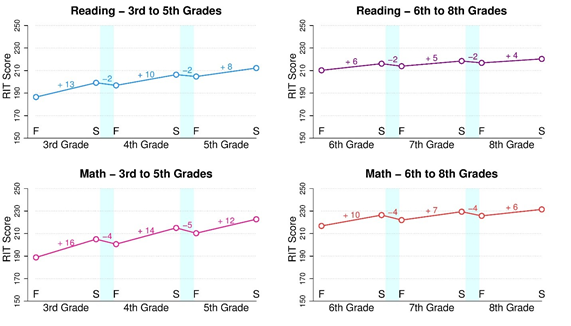
I read an article about how the summer break is harmful and how homeschool is beneficial.  The author is mentioning that summer break is harmful to children in two reasons.  Firstly, the summer break will empty student’s mind and the content that they learned through the class, thus all of their effort and the teacher’s effort will be a waste.  I found this has been proven by multiple kinds of research.  For example, you can clearly see the decreasing of the score from the chart made from the data of 2015 NWEA RIT Scale Norms Study.

During the summer period, most wealthy and affluent families took all excuses to escape from the hot and harsh summer weather with their kids to the cool countryside. This affected school attendance and learning progress since school attendance weren’t mandatory at that time…..  They all agreed that the idea of learning year-round was not ideal for kids since the brain is a muscle which needed to be rested. (Malki Ehrlich)

This way of thinking has continued until now, because this is a worldwide tradition for educational systems, and it’s not easy to change.  On top of that, the summer break has an important role.  Many families tend to have a family trip during this time of the year, and it helps them to build relationships within the family members.  If you are homeschooling, you will have a lot of time to be with your kids, and you will be able to spend a lot of time with them and create relationships with them, but if the mother and the father are both working, it is difficult to spend a lot of time together and create relationship.  Thus, the summer break is a great opportunity to do that.  Studying is not the only important thing in life.  Therefore, I think the summer break is necessary for a healthy development of the characters of the children.

In the article, Tracy Cassels also mentioned how homeschool is beneficial for her daughter.  There is less bullying in the social group of the homeschoolers.  That is because, among children, there is already the natural hierarchy based on age, not the artificial hierarchy based on clothes and so on.  It also suits the kids’ needs and can provide learning in the best way for them, boosts their strong point and reduces the pressure of left-behind feeling for their weak point.  I totally agree with all those points, but I have two questions.  The first question is about the first reason she mentioned why she decided to homeschool her daughter.

My stepson went through the public school system in B.C. and we were not pleased with how it went for him. (Tracy Cassels)

She didn’t explain the reason clearly, so we don’t know what kind of problem that public-school system had caused.  I understand that she was caring about her stepson’s privacy, but I think if she had made it clear, it might have been a really important argument about this topic.  I think it would be better if she had made the relationship vaguer that people can’t tell that it is precisely about him, and give us the actual context that happened. 

The other question was how homeschooling people treat some subjects that the children dislike.  If you put weight on “enjoy learning”, it would be difficult to push the children to do what they don’t like.  Just like a Syrian refugee, Mr. al-Jasem first disliked the smell of the fish, but he got used to it and got really good at cleaning the fish, there may be a lot of things which you will be forced to do at first, and then get accustomed to it, or even like it.

Initially, Mr. al-Jasem admits he was less than enamored with the time-consuming, smelly work of processing fish. But he grew accustomed to the odor and he got faster – he can now clean and fillet three fish a minute. (CAMILLA CORNELL)

I really want to know how the homeschoolers deal with this problem while keeping the learning itself fun.  If we can introduce this to class, learning will be much more exciting for everyone. 

【Reference】

Brait, Ellen. “Why one homeschooling mom says learning shouldn’t stop in the summer.” THE GLOBE AND MAIL, 18 AUGUST, 2016,

https://www.theglobeandmail.com/life/parenting/back-to-school/why-one-homeschooling-mom-says-learning-should-not-stop-in-the-summer/article31454851/. Accessed 16 February 2019.

CORNELL, CAMILLA. “Syrian refugee, fisherman’s friend: How a retiring couple found a new heir to their Lake Ontario business.” THE GLOBE AND MAIL, 29 July, 2018,

https://www.theglobeandmail.com/business/small-business/managing/article-syrian-refugee-fishermans-friend-how-a-retiring-couple-found-a-new/. Accessed 16 February 2019.

Kuhfeld, Megan. “Summer Learning Loss: What We Know and What We’re Learning.” nwea, 16 July, 2018,

https://www.nwea.org/blog/2018/summer-learning-loss-what-we-know-what-were-learning/. Accessed 16 February 2019.

Ehrlich, Malki. “Why Do We Have Summer Vacation?” GINGER, 30 July, 2017,

https://www.gingersoftware.com/content/why-do-we-have-summer-vacation/. Accessed 16 February 2019.

Inclusion in education

This article about inclusive education is really interesting.  It made me think more deeply about it.  What is the cause of the problem?  Is it really beneficial for the students who have disabilities or difficulty to study at a regular school and join a regular class, even though there are a lot of pieces of evidence that many of them are actually struggling or suffering?  What is a good integration and how can we achieve it?

The article talks about several situations where the inclusion of the children who have some kind of disability or difficulties is not done well. Some face difficulty just getting into the class, and some feel or actually are left out, and some face more direct discrimination, and there are a lot of students with disabilities or difficulties who are struggling to go to school.  Even though the first intention to free kids from the stigma of “special ed” maybe was good, the approach seems to be not good enough.  A cookie- cutter approach, as the title clearly tells you, must be the problem.  Even when the disability is classified the same, the degrees and the situations are all different so the ideal way to tackle the problems must be different. We have to see that the current problematic situation is caused because of the lack of understanding all those facts.

 “We just wanted him to grow up in his community and be accepted for who he was because we accept him for who he [is],” she says. “School was supposed to be his social community, and it was the exact opposite.”(LEUNG)

    I think this is a clear model to show us that if we rush without deepening the understanding of the other side, it will lead to a situation which is bad or even worse.  From the article, Is #MeToo worsening the divide between men and women?  we can see that even though the intention was good, without the understanding from the opponent, this great movement can be rather counterproductive.  The same thing could be said about the inclusion of students who have disability or difficulty in regular education.  If we move forward without deepening the understanding of the students or parents who have doubt or hesitation towards the inclusion, it may cause more trouble or discrimination.

I want to make this clear but at the same time, I have to say that I am not thinking that this movement towards the inclusion of the students with disability is a bad thing.  On the contrary, I believe it is necessary.  The number of children who have disability or difficulty is growing so the possibility will get higher for the students who don’t to meet them or work with them.  And moreover, it will be a great opportunity for the students who have disability or difficulty to prepare for the future, but also for the students who do not have disability this would be a really good opportunity to actually interact with those students and understand them. 

In order to achieve the integration, I believe that individual approach is necessary.  We need to think carefully what is the best way for that child.  Especially for the children who have disability or difficulty, their experience at school may change their life completely.  I know a student who was hyperactive and who couldn’t fit into a regular school and went to a small alternative school.  They accepted him, took an individual approach based on his needs.  At first, he couldn’t sit down and listen for ten minutes, but now he is participating in the class and even taking top scores on history class.  This is a good example that if they can get the appropriate support and understanding, they can be well included and succeed in the class.  I believe that everyone has their own strong points and weak points, and for the students who have disability or difficulty, the weak point is just a bit more clearly seen than others.  Basically, there is no difference.  I believe it is important to gain this kind of understanding while they are young because they are more flexible to accept.  Through playing together or spending time together, they can make an individual connection with them, and it will nurture understanding and acceptance in an individual level.  Not to generalize them or considering them as a whole but to understand them as an individual is crucial, as you can see in the article, Syrian refugee, fisherman’s friend: How a retiring couple found a new heir to their Lake Ontario business.  Not to consider the refugee as a whole or not to deny them by saying negative things about them is very important.  If you can make an individual connection, it would be easier to understand, or at least have compassion towards them.

The small alternative school that the boy went

Therefore, I believe it is important to set a way to provide more individual approach which matches their needs, and to spread understanding towards them.

【Reference】

・LEUNG, WENCY. When it comes to creating inclusive classrooms, there is no cookie-cutter approach, AUGUST 26, 2016, THE GLOBE AND MAIL. Accessed 2 Feb, 2019.

・Cornell, Camilla. Syrian refugee, fisherman’s friend: How a retiring couple found a new heir to their Lake Ontario business, July 29, 2018 THE GLOBE AND MAIL. Accessed 2 Feb, 2019.

・KIMMEL, LISA. Is #MeToo worsening the divide between men and women? MAY 27, 2018, THE GLOBE AND MAIL. Accessed 2 Feb, 2019.

Unschooling in Canada

This was my first time hearing the word, “unschooling”, and reading this article about it was really interesting for me.  Unschooling is a new way of education in which the kids don’t go to a regular school, and study at home.  The difference to homeschool is that they don’t follow the curriculum set by the province and the students learn whatever they like whenever they want.  They have no curriculum, no homework, and no tests.  The way they actually learn varies from family, and I think it’s interesting because they can use the way which best suits their children.  For example, one way is to connecting real life and learning.   A trip to the grocery store will be a math lesson, and skipping stones can turn into a lesson about angles and velocity.  Another way is to connect learning to the things which the child is interested the most at that time.  If the child’s interest in Egypt led to reading a biography about King Tut, researching pyramids and reading a fictional story about mummies.  I think this variation of educational methods is one of the benefits of unschooling.  The best way of learning differs from person to person so this could be a huge benefit that regular school or homeschool can’t or difficult to provide.  For example, in a usual lecture type education, using only practical based learning is difficult.  This can maximize the efficiency of learning for the individual, and there is a clear benefit.  They can learn faster, and better.

The other benefit is that the child will have more responsibility for their learning and they will learn better, and with pleasure.  The child can choose what interests them, and they learn better when they are subjectively and willingly learning, far better than being forced to study.  I think this is really important especially nowadays when the discussion about “why do we learn?” has become great.  In my home country, Japan, a lot of students are questioning the reason to learn, but they are just only told: “It’s necessary to get into a good university and get a good job”.  This is not a problem only for Japan, but also for a lot of countries in southeast Asia, such as China and South Korea.  If they can learn to take responsibilities about what to learn and why the complicated learnings in high school will not be a really heavy thing.

There may be an argument that students will not be able to develop their social skills through unschooling, nut those skills will be naturally trained through interacting with their parents, siblings, neighbors, and many more.  In addition, they can have a group to do field trips or many more collaborative activities, just like the homeschoolers are doing.  There may also be an argument that it is also important to learn a certain amount of cultural capital about your country and school is an opportunity for governments to build patriotism, but I don’t think this is an important argument here.  You will learn a lot about your own culture through the community.  For example, being involved in a traditional festival held in that area will teach the children about the history behind that, and the importance of it.  The opportunities of being involved will be the same for children who are doing unschooling and children who are going to school.  In addition, I think that governmental patriotism is unnecessary for children to learn.  In my own country, Japan, we did it too much and it ended in a disastrous result.  The heart to love and to be proud of their own country can be taught in multiple places in multiple ways, and it doesn’t need to be school.

However, there are some negative points about unschooling.  First is that this type of education is only available to the middle class or upper middle class.  A mother or a father needs to be a full-time mom or dad, so for a family which both parents are working, this way of education is impossible.  Also, in order to teach, the parents themselves need a certain level of knowledge, so if they have a lower level of education, it’s difficult and this situation is often seen in lower classes.  If the upper class or the upper middle class only benefits from this, the economic disparity will be even bigger.  It will create a vicious cycle for the lower class, and it has a crucial impact on them.  It is proven that economic inequality has a prejudicial effect on health.  For example, life expectancy in the US varies by as much as a staggering 30 years.  This is not a problem which could be ignored.  Therefore, we need to look for a way to allow everyone to get the same advantage. 

Stein, Stacey. Unschooled kids learn what they want – no curriculum, no homework, no tests, The Globe And Mail, September 2, 2018, https://www.theglobeandmail.com/life/article-unschooled-kids-learn-what-they-want-no-curriculum-no-homework-no/. 17 Jan 2019.

Brown, Dana. Inequality is killing us literally, THENEXTSYSTEMPROJECT, August 16, 2017, https://thenextsystem.org/learn/stories/inequality-killing-us-literally. 18 Jan 2019.

最初のブログ投稿

これは最初の投稿です。編集リンクをクリックしてこの内容の変更や削除を行うか、新しい投稿を追加しましょう。この投稿内で、なぜブログを始めたのか、どんなことについてブログを書いていくのか、といったことを読者に伝えるのもよいでしょう。ヘルプが必要な場合は、サポートフォーラムを利用して、フレンドリーな人々に質問してみましょう。