This article about inclusive education is really interesting. It made me think more deeply about it. What is the cause of the problem? Is it really beneficial for the students who have disabilities or difficulty to study at a regular school and join a regular class, even though there are a lot of pieces of evidence that many of them are actually struggling or suffering? What is a good integration and how can we achieve it?
The article talks about several situations where the inclusion of the children who have some kind of disability or difficulties is not done well. Some face difficulty just getting into the class, and some feel or actually are left out, and some face more direct discrimination, and there are a lot of students with disabilities or difficulties who are struggling to go to school. Even though the first intention to free kids from the stigma of “special ed” maybe was good, the approach seems to be not good enough. A cookie- cutter approach, as the title clearly tells you, must be the problem. Even when the disability is classified the same, the degrees and the situations are all different so the ideal way to tackle the problems must be different. We have to see that the current problematic situation is caused because of the lack of understanding all those facts.
“We just wanted him to grow up in his community and be accepted for who he was because we accept him for who he [is],” she says. “School was supposed to be his social community, and it was the exact opposite.”(LEUNG)
I think this is a clear model to show us that if we rush without deepening the understanding of the other side, it will lead to a situation which is bad or even worse. From the article, Is #MeToo worsening the divide between men and women? we can see that even though the intention was good, without the understanding from the opponent, this great movement can be rather counterproductive. The same thing could be said about the inclusion of students who have disability or difficulty in regular education. If we move forward without deepening the understanding of the students or parents who have doubt or hesitation towards the inclusion, it may cause more trouble or discrimination.
I want to make this clear but at the same time, I have to say that I am not thinking that this movement towards the inclusion of the students with disability is a bad thing. On the contrary, I believe it is necessary. The number of children who have disability or difficulty is growing so the possibility will get higher for the students who don’t to meet them or work with them. And moreover, it will be a great opportunity for the students who have disability or difficulty to prepare for the future, but also for the students who do not have disability this would be a really good opportunity to actually interact with those students and understand them.
In order to achieve the integration, I believe that individual approach is necessary. We need to think carefully what is the best way for that child. Especially for the children who have disability or difficulty, their experience at school may change their life completely. I know a student who was hyperactive and who couldn’t fit into a regular school and went to a small alternative school. They accepted him, took an individual approach based on his needs. At first, he couldn’t sit down and listen for ten minutes, but now he is participating in the class and even taking top scores on history class. This is a good example that if they can get the appropriate support and understanding, they can be well included and succeed in the class. I believe that everyone has their own strong points and weak points, and for the students who have disability or difficulty, the weak point is just a bit more clearly seen than others. Basically, there is no difference. I believe it is important to gain this kind of understanding while they are young because they are more flexible to accept. Through playing together or spending time together, they can make an individual connection with them, and it will nurture understanding and acceptance in an individual level. Not to generalize them or considering them as a whole but to understand them as an individual is crucial, as you can see in the article, Syrian refugee, fisherman’s friend: How a retiring couple found a new heir to their Lake Ontario business. Not to consider the refugee as a whole or not to deny them by saying negative things about them is very important. If you can make an individual connection, it would be easier to understand, or at least have compassion towards them.
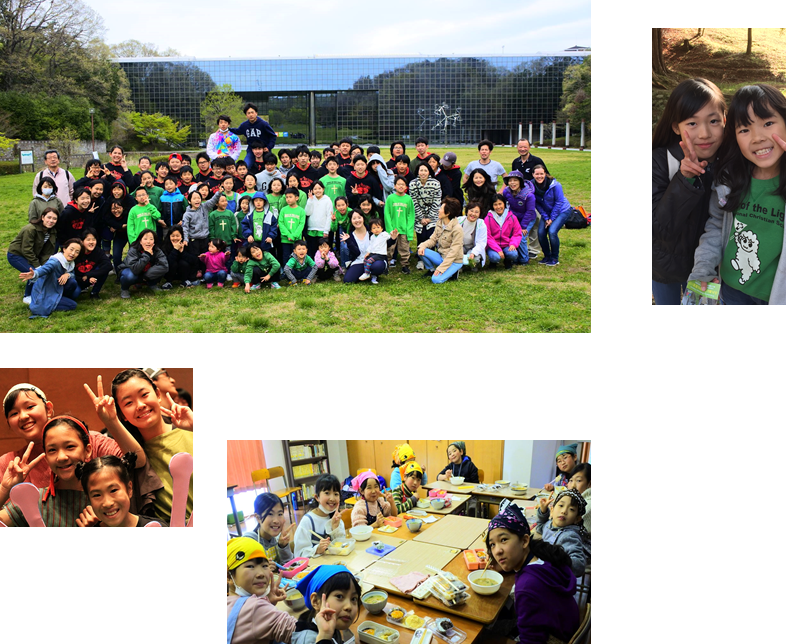
Therefore, I believe it is important to set a way to provide more individual approach which matches their needs, and to spread understanding towards them.
【Reference】
・LEUNG, WENCY. When it comes to creating inclusive classrooms, there is no cookie-cutter approach, AUGUST 26, 2016, THE GLOBE AND MAIL. Accessed 2 Feb, 2019.
・Cornell, Camilla. Syrian refugee, fisherman’s friend: How a retiring couple found a new heir to their Lake Ontario business, July 29, 2018 THE GLOBE AND MAIL. Accessed 2 Feb, 2019.
・KIMMEL, LISA. Is #MeToo worsening the divide between men and women? MAY 27, 2018, THE GLOBE AND MAIL. Accessed 2 Feb, 2019.


