In this blog, I want to talk about my field placement. I went to help out LCC, which stands for Language Conversation Circles. At first, I had an image like a language exchange towards it, because I saw this line at the top of the page of LCC.
Are you interested in meeting new people and in learning new languages? If so, the IEC’s Language Conversation Circles (LCC) are for you!
(International Education Centre)
I thought that I am going to teach Japanese to the participants, but it was totally different. Below that line, there was a line like this, and this describes better what LCC actually looks like.
These peer-led circles will give you the opportunity to learn with and amongst people from around the world while practicing your language skills in a fun, relaxed and creative environment. (International Education Centre)
LCC is IEC student staff organized program which collaborates with the EDS or TESA. (IEC: International Education Centre, which provides a range of programs and services to support and enhance the experience of international students.)
(EDS: Education Studies)
(TESA: Teaching and Education Studies Association, which is an organization for and of students in education studies field.)
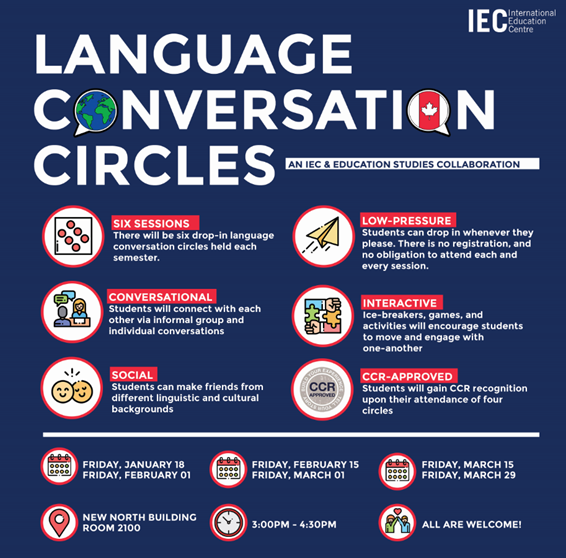
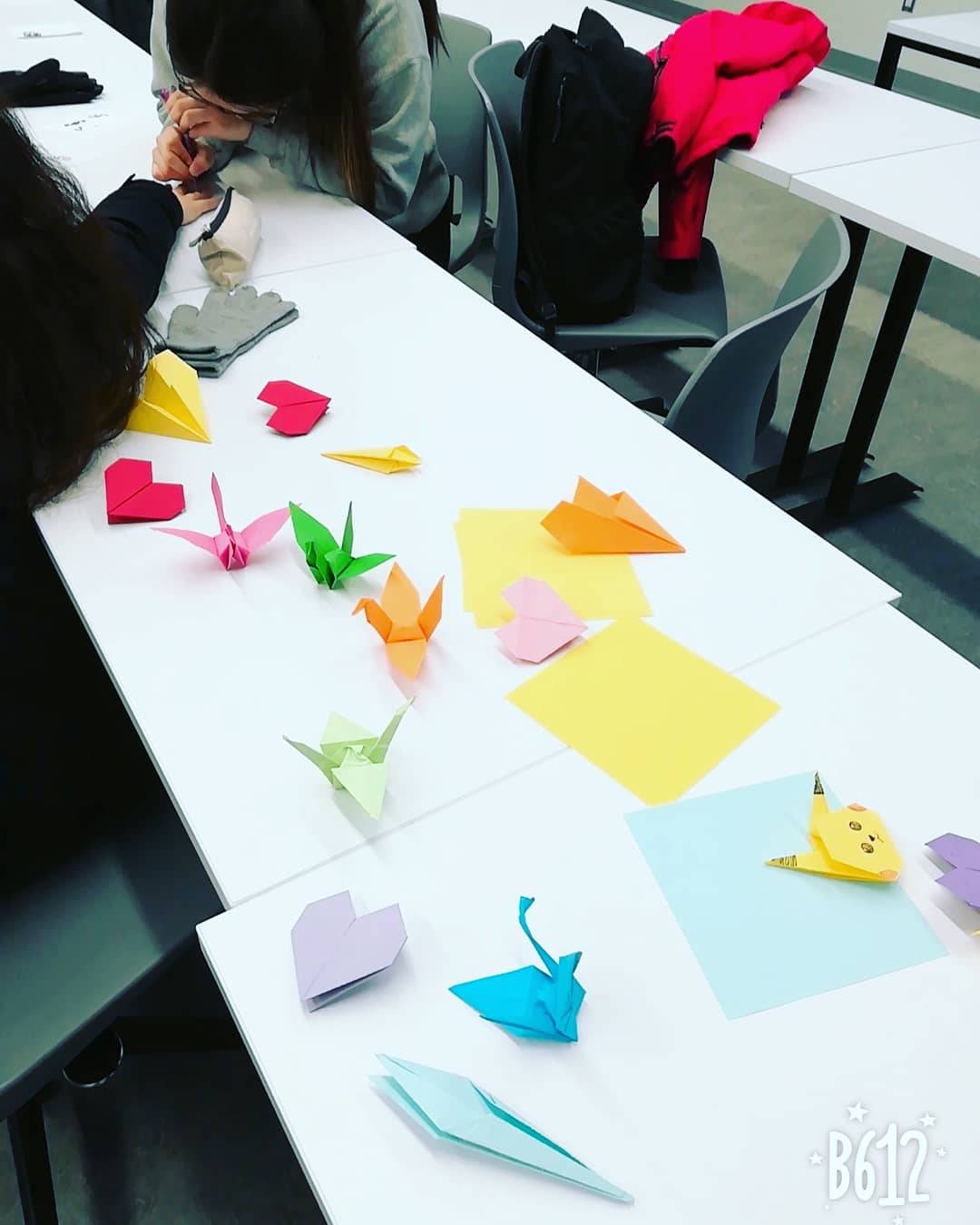
The IEC provides a chance for EDS students to harness their teaching and leading skills in the LCC sessions. The main goal of the circles is to provide an opportunity to learn about language and cultural aspects from others in a safe and meaningful matter. LCC is a place where you have fun and learn about different cultures all around the world. One session will be consisted with an ice breaker, discussion, two or three activities, and a reflection. Each session has a theme, and all the activities are related to that. For example, we had a session about video game, so we did an ice breaker, 4 corner discussion, Kahoot about various video games from all around the world, and then played a video game that we can all play together with our smart phones. In another session about handcrafts in different cultures, we had an icebreaker and a discussion, and after that, we had three different booths to actually experience different handcrafts from all over the world. One was Origami from Japan, Hana from India, bead art from Africa. As you may see from this example, we will learn about other culture from all over the world, and have a discussion about the topic with a lot of people who are from different parts of the world, and who has different ideas. I think this opportunity is precious, because we do have some opportunity of sharing different cultures and ideas, but we have a limited time or we need to relate back to the topic of the class. Therefore, purely talking and sharing about our own culture in a safe and open environment is a chance we don’t often have.
I was able to help out as one of the facilitators, and I learned a lot through it. I learned a lot of practical techniques to get people to be involved, and the points we need to be careful as teachers about how students react to certain things. The various ideas and tools that everyone was using was totally new to me, such as Kahoot! Game, online design tool called Canva, Jackbox game, four squares discussion, and many more. I experience how useful they are, and I really want to use them in my class in the future so that the students will be more engaged. The other thing I learned that I need to be aware is the atmosphere of the class during the discussion. Even here in Canada, the students were hesitating to answer when we were sitting in a row and it was quiet, so I think the shy Japanese students will be even more quiet. When we were in circle or when we were doing four squares, the students were more opened, or when the atmosphere was franker and everyone was speaking, the students who were quiet was also talking. I also learned that the teachers needs to be positive and have fun first in order to make students positive and have fun in class.
The thing I am still wondering is how to actually integrate this into a Japanese classroom. Compared to Canada, Japan is a less diverse country, and we don’t have a lot of mix in terms of race, ethnicity, religion, and culture. There are some students who is different from the majority, but if we’re to do some activity focusing on the difference, we need to be very careful. The Japanese culture itself really prioritize harmony, to be the same as everyone and not be the one outstanding one. It is a really sensitive problem, which can even lead to bullying, so as a teacher, I need to be very careful not to create division.
(Citation)
University of Toronto Mississauga> International Education Centre> On Campus Opportunities> Language Conversation Circles
Language Conversation Circles. Retrieved from
https://www.utm.utoronto.ca/international/https%3A/utm.utoronto.ca/international/campus-opportunities/language-conversation-circles.


